Word Scramble
Rearrange the jumbled letters to spell each hidden word.Word Scramble takes an everyday word, shuffles its letters into a jumbled rack, and challenges you to put them back in the right order. All the letters you need are right there in front of you, with none missing and none added; the only puzzle is the arrangement. Tap or drag the tiles to rearrange them, and once they spell a real word the round is solved. The fun sits in that gap between seeing a pile of letters and suddenly seeing the word hiding inside them. Some jumbles almost read themselves, while others hide a common word behind an order your eye refuses to settle on. Skilled solvers do not try every combination; they hunt for familiar beginnings and endings, group letters that usually travel together, and let the vowels and consonants fall into a natural shape.
You can play Word Scramble free in your browser here - a rack of jumbled letters to rearrange into words. It is rated a quick word game, and every word can always be unscrambled from its letters. Choose from Short words, Medium words or Long words. Your best times and solve counts save automatically, and you can take on the daily challenge whenever you like.
How Word Scramble works
In short: Rearrange the jumbled letters to spell each hidden word. The play area is a rack of jumbled letters to rearrange into words, it is rated a quick word game, and every word can always be unscrambled from its letters.
Key facts about Word Scramble
| Objective | Rearrange the jumbled letters to spell the hidden word. Every letter of the answer is already on the rack, so the whole task is finding the right order. |
|---|---|
| Play area | A rack of jumbled letters to rearrange into words |
| Difficulty | A quick word game |
| Solvability | Every word can always be unscrambled from its letters |
| Board options | Short words, Medium words, Long words |
| Category | Word puzzle |
Learn Word Scramble in five steps
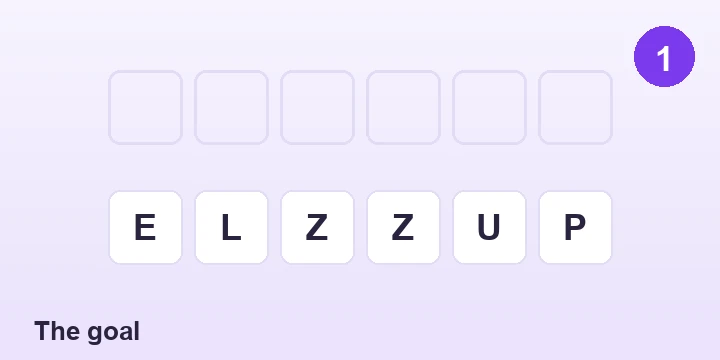
The goal
Rearrange the jumbled letters to spell the hidden word. Every letter of the answer is already on the rack, so the whole task is finding the right order.
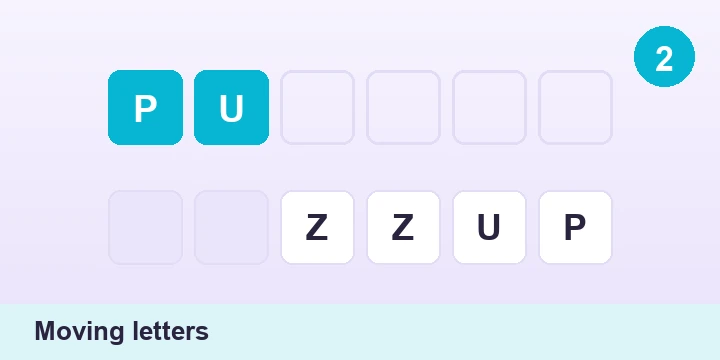
Moving letters
Tap or drag the letter tiles to swap them around and build your word. You can rearrange them as many times as you like before you settle on an answer.
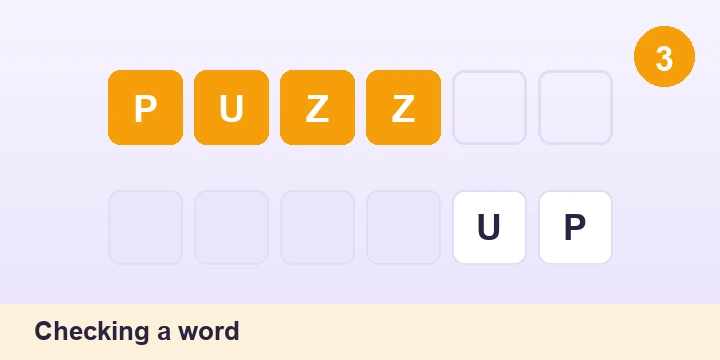
Checking a word
When you think you have it, submit the arrangement. A correct spelling locks in and clears the round, while a wrong one simply lets you keep shuffling.
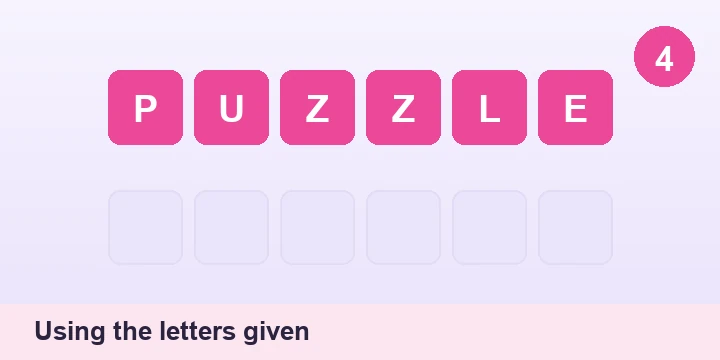
Using the letters given
Nothing is missing and nothing extra is added, so if a letter is on the rack it belongs in the word, and if you are not using every tile you have the wrong word.
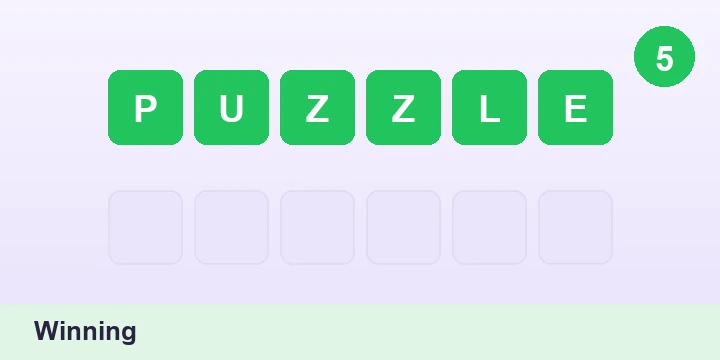
Winning
Spell the hidden word to solve the round. Longer words on the harder settings have far more possible orders, so they take more searching to crack.
Where Word Scramble came from
Rearranging the letters of a word to reveal another is an ancient pastime. Anagrams were enjoyed by the Greeks and later treated as a serious amusement in Europe, where writers hid names and mottoes inside shuffled letters for centuries.
The word scramble found its most famous modern form in the newspaper puzzle Jumble, created by Martin Naydel in 1954. Jumble scrambles a set of everyday words for the reader to solve, then uses circled letters from the answers to form a final punning solution, and it remains one of the most widely syndicated puzzles in the world.
The scramble has proved a perfect fit for screens, where letter tiles can be shuffled and checked instantly. From newspaper corners to word-game apps, unscrambling jumbled letters has stayed a quick, satisfying test of vocabulary and pattern recognition that players of every age enjoy.
Tips to solve Word Scramble faster
💡 Best move: Best move: look for a familiar word ending first, since common tails like -ing, -ed, -er or -tion lock several letters in place at once and shrink what is left to arrange.
- Sort the letters into vowels and consonants in your head, because seeing how many of each you have quickly suggests where the word can break and where it cannot.
- Hunt for letter pairs that usually travel together, such as th, ch, st or br, and treat each pair as a single building block.
- Try likely beginnings, since a word probably starts with a consonant or a common blend, so shuffle a plausible opening to the front and see what the rest wants to become.
- Do not grind through every arrangement; rearrange in meaningful chunks, moving groups of letters rather than one tile at a time, and the word tends to appear.
- If you are stuck, place an awkward letter like Q, X or J first, because rare letters fit into very few words and often reveal the answer fast.
Sharper tactics for Word Scramble
- Anchor on affixes. Recognising a prefix like re-, un- or pre-, or a suffix like -ly or -ness, instantly fixes a chunk of the word and leaves only a short core to unscramble.
- Use vowel placement as a skeleton. Most words alternate consonants and vowels in a rough rhythm, so laying the vowels out first often shows where the consonants have to slot in.
- Lean on letter frequency. A rare letter such as Q, Z, X or J has so few possible neighbours that building outward from it is far faster than starting with common letters like E or R.
- Think in word families. If the letters suggest one word, its relatives are close, so swapping an ending can turn a near-miss into the exact answer without starting over.
- Chunk and rotate. Rather than testing letters one by one, form two or three likely fragments and try them in different orders, since recombining chunks covers the real possibilities much faster than brute force.
Mistakes that trip people up
- Testing letters one at a time - look for common endings like -ing or -ed first to lock several letters in place at once.
- Ignoring the vowel and consonant balance - sorting them in your head quickly shows where the word can and cannot break.
- Overlooking letter pairs - treat blends like th, ch or st as single blocks rather than loose separate tiles.
- Leaving a tile unused - the answer uses every letter, so if you have spare tiles you have found a shorter word, not the target.
Ways to play Word Scramble
Short words
Jumbles of brief three to five letter words that solve almost at a glance, ideal for a fast round or a younger player.
Longer words
Harder scrambles built from longer words with many possible orderings, where spotting endings and letter pairs really pays off.
Jumble style
The classic newspaper format that scrambles several words and then combines chosen letters into a final bonus answer or pun.
Anagram challenges
Variants that ask you to make any valid word, or as many words as you can, from a given set of letters rather than one fixed target.
Word Scramble questions, answered
What is a Word Scramble?
A Word Scramble is a puzzle where the letters of a hidden word are shuffled out of order, and you rearrange them to spell the word. Every letter you need is provided and no extra letters are added, so the only challenge is finding the correct order.
Is every scramble solvable?
Yes. Each jumble is made from a real word, so it can always be unscrambled back into that word using exactly the letters shown. If your attempt does not use every tile, you know you have not yet found the intended answer.
What is the fastest way to unscramble a word?
Look for common endings and beginnings first, group letters that usually pair up like th or ing, and separate the vowels from the consonants. Those habits let you build the word in chunks instead of testing endless single-letter arrangements.
Are word scrambles the same as anagrams?
They are closely related. An anagram rearranges letters to form a different word or phrase, while a word scramble simply hides one target word by mixing up its letters. Both rely on the same skill of seeing order inside a jumble.
Do the difficulty levels change the words?
Yes. The easy setting uses short words, the medium setting uses moderate ones, and the hard setting uses longer words. Longer words have far more possible letter orders, so they take more searching to unscramble even when the word itself is familiar.
Does a leftover tile mean I am wrong?
Usually, yes. The answer uses every letter on the rack, so if you have spelled a word but have tiles left over, you have found a shorter word rather than the intended one. Fitting in every letter is part of the check.
Where did word scrambles come from?
Rearranging letters is ancient, as the Greeks played with anagrams thousands of years ago. The familiar newspaper scramble puzzle, Jumble, was created by Martin Naydel in 1954 and is still widely printed in papers today.
Still curious about Word Scramble? Browse the full puzzle FAQ, look up a term such as word puzzle in the puzzle glossary, or compare Word Scramble with the other games in the rules for every puzzle.
Last updated .